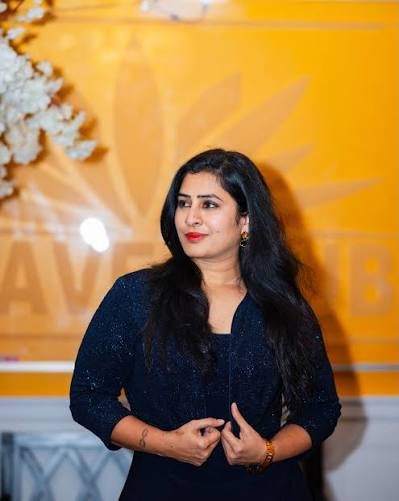
Palivela Naga Satya Anusha
From Nidadavole to 13 Billion+ Views: Anusha’s Remarkable Journey Behind SimpleGhar Telugu
A few disappointing online purchases during the pandemic gave Anusha a simple idea: buy products, test them properly and explain in Telugu whether they are actually worth the money. What began with videos that initially attracted little attention has grown into SimpleGhar Telugu—a 6.8M+ subscriber channel with more tha
Sometimes a business idea begins with a complicated market study.
Sometimes it begins with one frustrating purchase.
For Palivela Naga Satya Anusha, the journey behind SimpleGhar Telugu began much closer to everyday life.
An online product arrives.
The quality is disappointing.
Another product does not work as expected.
You search YouTube hoping somebody has already tested it properly.
Useful information is difficult to find.
And eventually one question appears:
Why not test these products ourselves and tell people what actually works?
That simple consumer problem gradually became one of Telugu YouTube's biggest product-discovery brands.
Today, millions know Anusha through SimpleGhar Telugu.
The channel tests gadgets, household products, kitchen tools, appliances, car accessories, smart devices and everyday problem-solving products.
But before billions of views, there was no guarantee anybody would watch.
There were just products, experiments, a camera and the willingness to keep publishing.
From Nidadavole to Tadepalligudem
Anusha comes from Nidadavole in Andhra Pradesh.
Her early path looked much more conventional than the digital career that would eventually make her widely recognised.
She studied B.Tech in Tadepalligudem.
At that stage, there was no obvious indication that her professional identity would eventually revolve around YouTube, technology products and digital media.
Like many engineering graduates, she had completed a degree that could potentially lead toward a traditional professional route.
But careers do not always remain connected to the subject printed on a degree certificate.
Sometimes education provides one foundation while life reveals another opportunity.
Moving to Hyderabad
After marriage, Anusha moved to Hyderabad.
The move eventually placed her in the city where SimpleGhar would develop into a larger digital-media operation.
But the defining moment was not initially a studio or business plan.
It was the COVID period.
Lockdowns dramatically changed consumer behaviour.
People who had traditionally visited stores began purchasing more products online.
E-commerce became increasingly important.
But buying online created another problem.
You could see photographs.
Read specifications.
Read ratings.
But you could not physically test the product before paying.
That gap between product listing and real-world experience became the opportunity Anusha noticed.
When Online Shopping Became the Problem
Anusha later explained that during the pandemic she bought products online that were disappointing in quality or failed sooner than expected.
She began searching YouTube for useful information.
Could someone show the product properly?
Did it actually work?
Was the quality good?
Would it solve the problem shown in the advertisement?
Was it worth the price?
She felt the available information was not always enough.
Instead of remaining only a frustrated customer, she began thinking like a creator.
What if somebody purchased these products, used them and explained the result in Telugu?
That question became the foundation of SimpleGhar Telugu.
The Idea Was Consumer-First
The strength of the idea was not simply:
"Let's make gadget videos."
It was:
"Let's help people decide whether a product is actually useful."
That difference matters.
A catalogue tells you what a product claims.
A review should tell you what happens when the claim meets reality.
Does the cleaner actually clean?
Does the kitchen tool save time?
Does the gadget work as shown?
Is the appliance easy to use?
Does a cheap product provide genuine value?
Would the reviewer personally recommend buying it?
Those questions gradually became central to the SimpleGhar identity.
The First Videos Did Not Automatically Work
Today, a SimpleGhar Telugu upload can reach millions of viewers.
That was not the starting point.
Anusha has said that the first videos received little attention.
There were also negative comments.
Some viewers essentially questioned why anyone should care about the content.
This is a common creator experience.
The idea may make sense to the person creating it.
The audience may not immediately understand why it matters.
Creators then face a decision.
Stop because the first response was weak.
Or improve until the value becomes obvious.
Anusha continued.
Negative Comments Became Part of the Beginning
One of the more memorable parts of Anusha's early story is the criticism she recalled receiving.
People questioned why she was making these videos.
Some comments dismissed the content as unnecessary.
That reaction could easily have ended the experiment.
Instead, she continued buying and demonstrating new products.
Over time, viewers began recognising the utility.
A product video was not just entertainment.
It could potentially save someone money.
Or help someone discover something useful.
The same kind of audience that initially asked:
"Why do we need this?"
eventually began asking for recommendations.
Buying Products to Build Trust
One of the challenges in product content is independence.
If every product comes directly from a brand, audiences may wonder whether criticism is possible.
During the early phase, Anusha said she purchased different products herself in order to create videos around them.
That required investment.
A creator may publish the video without knowing whether the cost will ever be recovered.
The product has to be purchased.
Then tested.
Then filmed.
Then edited.
Then published.
Only afterward does the creator discover whether anyone cares.
That uncertainty is part of building a new content category.
The Product Became the Story
SimpleGhar Telugu discovered a format particularly suited to mobile audiences.
Show a product.
Show the problem.
Demonstrate how the product works.
Reveal whether it solves the problem.
Give the viewer the information needed to decide.
The story can often be understood visually even before the explanation is complete.
That made the format highly compatible with short-form video.
The viewer sees something unfamiliar and immediately wonders:
What is that?
How does it work?
Do I need it?
That curiosity creates attention.
Telugu Made the Information More Accessible
Another important decision was language.
Technology content in India has often been dominated by English and Hindi.
SimpleGhar Telugu addressed viewers who wanted practical product information in Telugu.
That localisation goes beyond translation.
A useful regional review explains the product in the same language people use while discussing purchases with family.
Is it useful?
Is it worth the money?
Will it work at home?
Can parents use it?
Is there a cheaper option?
Those conversations sound more natural in the viewer's own language.
Telugu became part of the product itself.
Technology Without Technical Complexity
SimpleGhar Telugu also occupies a slightly different position from traditional technology reviewing.
The content is not limited to:
processors,
benchmark scores,
smartphone chipsets,
or technical specifications.
Technology is interpreted much more broadly.
A cleaning device can be technology.
A kitchen gadget can be technology.
A car accessory can solve a practical problem.
A smart plug can simplify a household task.
A storage product can improve organisation.
A simple tool discovered online can become useful content.
That expanded the potential audience far beyond hardcore technology enthusiasts.
Home + Tech Became the Niche
The name "SimpleGhar" communicates this combination clearly.
"Simple."
"Ghar."
The underlying idea is not technology for technology's sake.
It is technology and products that can make everyday life simpler.
That positioning allowed the channel to cover a much wider range of categories.
Kitchen.
Cleaning.
Cars.
Mobiles.
Smart-home devices.
Personal care.
Storage.
Home appliances.
Safety products.
Small utilities.
The common question remains:
Can this make everyday life easier?
October 2021: The Current Channel Begins
The current SimpleGhar Telugu YouTube channel dates to October 19, 2021.
That makes the scale achieved in the following years particularly notable.
The channel moved from a pandemic-era product-content experiment into a major Telugu digital property.
By 2023, reports were already describing a community of approximately 1.1 million YouTube subscribers.
The growth did not stop there.
The next few years multiplied the scale dramatically.
From 1.1 Million to More Than 6.8 Million
By September 2026, public YouTube tracking placed SimpleGhar Telugu at roughly:
6.8 million subscribers.
More than 13 billion cumulative views.
Around 1,240 videos.
That means the channel added millions of subscribers after it was already considered successful in 2023.
This is an important distinction.
Some channels experience one breakthrough and then plateau.
SimpleGhar Telugu continued scaling.
The audience became larger.
Publishing continued.
Shorts became a major distribution engine.
And the brand became recognisable well beyond its original early community.
13 Billion Views
Thirteen billion cumulative views is difficult to visualise.
It does not represent 13 billion unique people.
One person may watch many videos.
Shorts can also generate repeated views.
But even with those qualifications, the scale is extraordinary.
A Telugu-language product channel created in 2021 has generated viewing activity measured in the tens of billions.
That tells us something larger than the story of one creator.
It shows how powerful regional-language digital distribution has become.
A creator does not need a television network to reach mass audiences.
The platform itself provides distribution.
More Than 1,200 Uploads
Another number deserves equal attention:
more than 1,200 videos.
A viral Short can happen accidentally.
Producing more than a thousand pieces of content cannot.
It requires an operation.
Products need to be discovered.
Research needs to happen.
Products need to be purchased or sourced.
Testing needs to happen.
Scripts need to be prepared.
Demonstrations need to be planned.
Footage needs to be shot.
Videos need to be edited.
Links need to be organised.
Uploads need to be managed.
Comments and feedback need to be monitored.
The visible creator may be the face.
At this scale, the work increasingly requires a team.
From Creator to Media Operation
SimpleGhar's current public company profile describes the organisation as an online audio and video media network headquartered in Hyderabad.
It was founded in 2021.
Current hiring activity demonstrates how far the operation has professionalised.
SimpleGhar recruits:
videographers,
video editors,
scriptwriters,
on-camera talent,
and other production roles.
That evolution is significant.
The journey began around solving a consumer-information problem.
It eventually created employment inside digital media.
The Team Behind the Videos
A large creator brand eventually becomes more than one person.
There are editors.
Videographers.
Writers.
Researchers.
Designers.
Anchors.
Operations staff.
Product sourcing.
Digital marketing.
Business relationships.
An audience may associate SimpleGhar Telugu strongly with Anusha.
But sustaining thousands of videos and billions of views requires systems around the on-camera personality.
This is the point where personal content begins evolving into a media company.
Expanding Beyond Telugu
The SimpleGhar identity did not remain limited to one language.
By 2026, the broader network was operating across languages including:
Telugu,
Hindi,
Tamil,
Malayalam,
and English.
Company recruitment material described the broader SimpleGhar ecosystem as having more than 14 million subscribers and more than 20 billion total views across its channels at that particular snapshot.
The Hindi operation itself later crossed major subscriber and view milestones.
This expansion demonstrates something particularly important about digital businesses:
A successful content format can sometimes be localised.
The product remains.
The language changes.
The cultural delivery changes.
The audience expands.
Telugu Became the Proof of Concept
SimpleGhar Telugu helped demonstrate that people wanted practical product discovery delivered in an accessible regional format.
Once the model works, the fundamental structure can be adapted.
Find useful products.
Test them.
Explain clearly.
Create short-form discovery content.
Produce deeper buying guides.
Link viewers to products when appropriate.
Build audience trust.
Repeat in another language.
That is very different from simply translating one video.
Each audience requires its own presenter, tone and cultural familiarity.
Shorts Became a Powerful Growth Engine
Short-form video plays an enormous role in the channel's scale.
A viewer scrolling YouTube Shorts may encounter an unusual household product.
They stop.
The product solves an interesting problem.
They watch the demonstration.
The algorithm then understands that viewers are interested.
Distribution expands.
This format is extremely powerful for product content because visual curiosity appears immediately.
You don't necessarily need to know SimpleGhar Telugu before watching.
The product itself becomes the hook.
One Short Reached Tens of Millions
The scale of individual Shorts demonstrates this clearly.
A SimpleGhar Telugu Short published in June 2025 accumulated roughly 36 million views.
That means one product-focused short-form video could independently reach an audience far larger than many conventional regional media programmes.
This is why Shorts transformed creator economics.
One upload can introduce the brand to millions of people who never deliberately searched for it.
Long-Form Still Matters
SimpleGhar Telugu has not relied only on Shorts.
The channel also publishes deeper product reviews and buying guides.
Examples include videos around:
kitchen gadgets,
cooking utensils,
car accessories,
water bottles,
appliances,
and product comparisons.
This creates two different content functions.
Shorts create discovery.
Long-form builds explanation.
Someone may discover the brand through a 40-second gadget demonstration.
When they are actually preparing to spend money, they may want a more detailed review.
That combination can strengthen the audience relationship.
Testing Became the Differentiator
The current SimpleGhar Telugu channel description emphasises products that are:
affordable,
tested,
and recommended.
The word "tested" is particularly important.
Internet product discovery is easy.
Thousands of interesting gadgets appear every day.
Trust comes from knowing whether somebody has actually used the product.
A product advertisement shows the ideal situation.
A useful reviewer needs to show reality.
That distinction is the core value proposition behind the brand.
Why Honest Reviews Matter
Product creators operate in a sensitive position.
The viewer may spend money because of what the creator says.
That creates responsibility.
A bad joke wastes 30 seconds.
A bad product recommendation can waste someone's money.
The larger the audience becomes, the more important credibility becomes.
This is why real-world testing is strategically valuable.
Trust compounds.
If several recommendations turn out useful, a viewer returns.
If recommendations repeatedly disappoint, follower count alone cannot protect the brand.
Affiliate Commerce Became Part of the Model
SimpleGhar's website and YouTube description openly disclose the use of affiliate links.
When users purchase eligible products through those links, SimpleGhar may earn a commission.
That is a standard creator-commerce business model.
Content creates discovery.
Review creates confidence.
The link creates a route to purchase.
The creator may then receive a commission.
This connects media and commerce directly.
The important principle is transparency.
The audience should understand when commercial relationships exist.
Creator Economy Meets E-Commerce
This business model demonstrates one of the most important shifts in modern retail.
Previously, shoppers might discover a product through:
television advertising,
newspapers,
retail stores,
or recommendations from friends.
Now they may discover it through a 30-second Reel or Short.
The creator becomes part of the consumer decision journey.
Discovery.
Education.
Comparison.
Recommendation.
Purchase.
All can happen through the same mobile device.
SimpleGhar Telugu sits directly inside that transformation.
2023: A Million-Subscriber Milestone
In 2023, media coverage documented Anusha's journey when SimpleGhar Telugu was at approximately 1.1 million subscribers.
At the time, she spoke about the criticism she received when beginning.
She also described the shift in public reaction.
People who once questioned the videos were now recognising her and asking for photographs.
That transformation is common in unconventional careers.
Before visible success:
Why are you doing this?
After visible success:
How did you do this?
The work may not have changed immediately.
Public perception did.
A Historical Income Figure — Not a Current One
The same 2023 account reported that Anusha said she was earning approximately ₹5–7 lakh per month at that stage.
That figure should be understood carefully.
It was a self-reported historical figure from 2023.
It should not be presented as her current 2026 income.
Creator revenue can change dramatically.
Views fluctuate.
Ad rates change.
Affiliate conversions change.
Brand campaigns vary.
Business expenses increase as teams expand.
For a career profile, the more reliable achievement is the measurable audience growth rather than speculation about current personal wealth.
The Bigger Achievement Was Building Trust
Revenue catches attention.
But revenue is not what created the business.
The sequence runs the other way.
Identify a consumer problem.
Create useful content.
Publish repeatedly.
Earn attention.
Build trust.
Develop distribution.
Then monetisation becomes possible.
Aspiring creators often reverse this sequence.
They begin with:
How much money can I make?
A stronger starting question is:
Why should anyone watch me?
SimpleGhar Telugu had a clear answer.
Because you may be about to spend money on something we have already tested.
Women in Technology Content
Anusha's success is also notable within the technology-content ecosystem.
Technology reviewing has historically been perceived as heavily male-dominated.
SimpleGhar Telugu challenged that assumption through a female-led on-camera identity reaching millions of viewers.
Her January 2026 creator-journey video even used the hashtag #womenintech alongside tech and gadget themes.
This matters for representation.
Technology does not belong to one gender.
Neither does product expertise.
Neither does entrepreneurship.
An audience ultimately responds to usefulness, communication and credibility.
The January 2026 “No Filter” Video
By January 2026, SimpleGhar Telugu published a long-form video titled:
“Everything I Never Told About Our YouTube Journey (No Filter).”
The channel described it as a discussion of:
personal life,
professional struggles,
honest product reviews,
behind-the-scenes experiences,
and the real creator journey.
The video itself attracted more than 1.6 million views.
The significance is not merely the number.
Audiences who initially followed the brand for products had become interested in the people behind the products.
That is what happens when a channel develops a genuine creator identity.
When the Audience Wants the Story Behind the Brand
Early-stage viewers ask:
What does this product do?
Mature audiences also ask:
How did you build this?
How many people work behind the channel?
What went wrong?
What sacrifices were involved?
How do you select products?
What happens behind the camera?
At that point, the business story itself becomes content.
SimpleGhar had moved from being only a recommendation channel to being a brand people were curious about.
The Evolution From Reviewer to Entrepreneur
Anusha's journey can therefore be understood in stages.
Consumer.
Problem finder.
Product tester.
Video creator.
Reviewer.
Recognisable presenter.
Large-scale creator.
And ultimately part of a professional digital-media ecosystem.
This progression shows how creator careers evolve.
The skill required for the first video is not the same as the skill required to operate at millions of subscribers.
At the beginning:
Can you make a useful video?
Later:
Can you build a system capable of making hundreds?
What Aspiring Creators Can Learn
SimpleGhar Telugu offers several strong career lessons.
### Find a Real Problem
The channel did not begin only because YouTube was popular.
It addressed a consumer problem:
people buying products without knowing whether they really worked.
### Start Before the Audience Exists
Early videos received little response.
That did not mean the concept had no value.
It meant the format still had to develop.
### Criticism Is Data, Not Always a Verdict
Some early viewers questioned why the content existed.
Eventually the audience proved there was demand.
Not every negative comment deserves to become a career decision.
### Invest in the Content
Product reviews often require purchasing products before the creator earns anything from the video.
Testing has a cost.
Professional content is not always free to produce.
Language Can Create Opportunity
Anusha did not need to become an English-language technology presenter.
Telugu created its own market.
This is one of the most important opportunities in India's internet economy.
Regional audiences are enormous.
Education.
Technology.
Finance.
Careers.
Food.
Entertainment.
Health information.
Product discovery.
All can be built in regional languages.
The gap itself can become the business.
Don't Copy the Biggest Creator
Another lesson is positioning.
If SimpleGhar Telugu had attempted to become another smartphone-specification channel, competition would have been intense.
Instead, the content expanded across technology and household problem-solving.
That gave the brand a distinctive category.
A cleaning gadget and a car accessory may look unrelated.
For the viewer, they share one promise:
something useful for everyday life.
A Product Review Is a Trust Contract
Every recommendation tells the viewer:
You can rely on our judgment.
That contract becomes more valuable as the audience expands.
At 100 viewers, one bad recommendation affects a small group.
At millions of subscribers, mistakes can travel widely.
Creators operating in product discovery therefore need increasingly strong standards.
Real testing.
Clear limitations.
Disclosure.
Comparisons.
And a willingness to say when something is not worth buying.
Building Systems Is the Next Level
The transition from creator to company happens when work can no longer depend on one person completing every step.
SimpleGhar's current hiring provides visible evidence of that shift.
Videographers.
Editors.
Scriptwriters.
Production staff.
On-camera talent.
Different language teams.
The brand is now building specialised roles around content creation.
That is entrepreneurship.
A creator job generates income for the creator.
A media operation begins creating jobs for other people too.
From One Telugu Channel to a Multi-Language Network
The broader SimpleGhar expansion is perhaps the strongest indication of how far the original concept has travelled.
A Telugu product-content identity became part of a multi-language operation.
Hindi.
Tamil.
Malayalam.
English.
The same underlying customer problem exists across languages:
People want to know whether products are worth buying.
The audience changes.
The need remains.
That makes the format scalable.
From Nidadavole to 13 Billion Views
The progression is extraordinary when reduced to a timeline.
Nidadavole.
B.Tech in Tadepalligudem.
Hyderabad.
Pandemic.
Unsuccessful online purchases.
An idea.
Testing products.
Early videos.
Negative comments.
October 2021 YouTube channel.
One million subscribers.
Then two.
Then several million.
More than one thousand uploads.
And by September 2026:
approximately 6.8 million subscribers.
More than 13 billion views.
The scale changed.
The basic idea did not.
Help people make better product decisions.
The Woman Behind SimpleGhar Telugu
The most useful lesson from Anusha's journey is not simply:
Start a YouTube channel.
Thousands of channels start every day.
The deeper lesson is:
Pay attention to frustrations.
A frustrating shopping experience can reveal a content gap.
A content gap can reveal an audience.
An audience can create a brand.
A brand can create a business.
And a business can eventually become a network.
SimpleGhar Telugu grew because a very ordinary consumer question was answered repeatedly:
“Is this product actually useful?”
Years later, billions of views suggest millions of people wanted that answer.
The Lesson Behind the Brand
Anusha did not begin with 6.8 million subscribers.
She began with a problem she personally understood.
She did not begin with 13 billion views.
She began with videos many people ignored.
She did not begin with a professional media network.
She began by testing products.
That progression is what makes the SimpleGhar Telugu story valuable for students, aspiring creators and entrepreneurs.
Opportunities are not always hidden inside entirely new inventions.
Sometimes the opportunity is already sitting inside an everyday frustration.
The difference is whether somebody notices it, solves it and keeps showing up long enough for millions of other people to notice too.